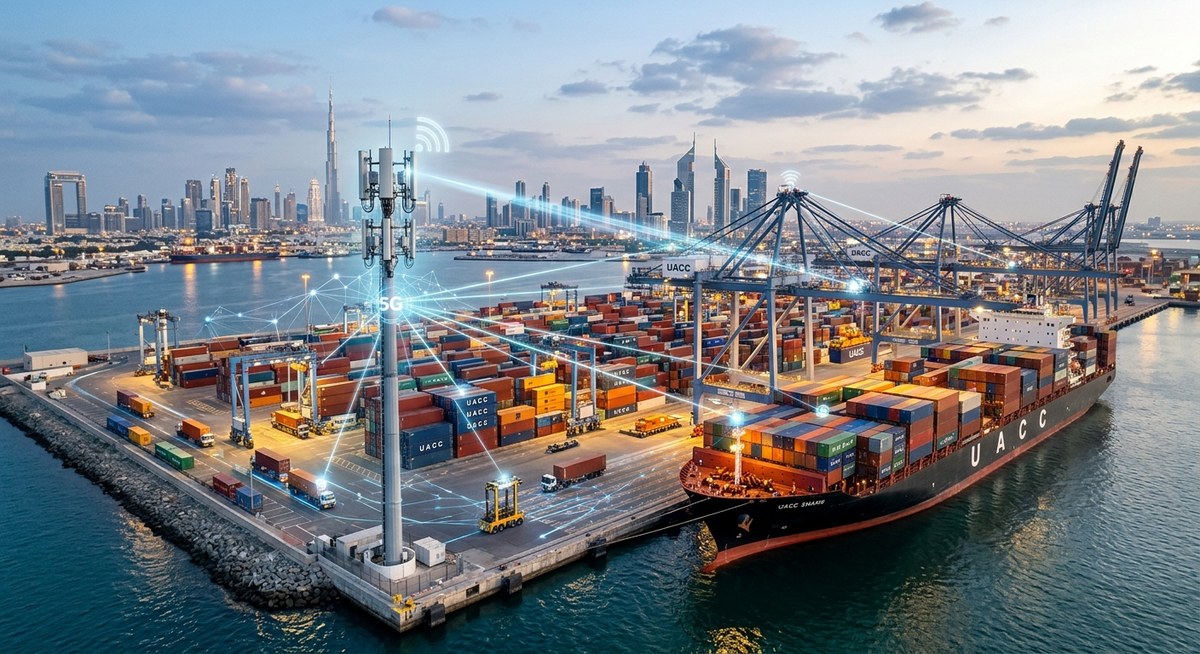
The marine industry stands on the cusp of a digital shift that promises to tighten timelines, reduce costs, and boost sustainability. 5G is not just a faster pipe for data; it is a platform for intelligent operations across ships, ports, and supply chains. For a sector defined by vast distances, variable weather, and complex regulatory environments, 5G opens a route to real time visibility, smarter decision making, and safer operations. At uacc.ae we see 5G as a transformational technology for maritime logistics, linking crew on deck with shore based planners, port authorities, and the machinery that moves cargo from ship to shelf.
Why 5G is a game changer for maritime logistics
5G brings a blend of ultra reliable low latency, high device density, and flexible network slicing that fits the maritime context. The benefits touch every layer of the supply chain, from the yard at the port to the vessel at sea.
- Real time visibility of containers and equipment
- More proactive maintenance and fewer port calls due to improved planning
- Safer, more efficient autonomous and remotely operated systems
- Stronger cyber security with dedicated and isolated networks
- Better environmental monitoring and port community data sharing
In short, 5G turns data into actionable intelligence when it matters most. It connects people, machines, and processes in ways that make port calls more predictable and voyages more efficient.
Real time data sharing and situational awareness
In modern logistics, the bottleneck is often information. 5G enables near instantaneous data transfer from container handling equipment, cranes, IoT sensors on chassis, and ships themselves. This translates into:
- Live updates on container positions and gate transactions
- Immediate alerts for equipment faults or abnormal conditions
- Shared situational dashboards that reconcile port, terminal, and ship schedules
- Faster response to disruptions such as weather, port congestion, or equipment outages
The result is a shared situational view that reduces waiting times and improves coordination across the entire port community.
Fleet management and predictive maintenance
Vessel performance, engine health, and hull condition can all be monitored with high fidelity using 5G connected sensors. Key outcomes include:
- Real time engine data streaming to shore based analytics
- Predictive maintenance that schedules work before failures occur
- Optimized routing based on current weather, currents, and port congestion
- Remote diagnostics to shrink maintenance windows and improve uptime
For fleet operators, this means fewer unplanned dry dock days and more time at sea delivering value.
Autonomous operations and remote piloting
Autonomous feature sets such as automated berthing, vessel docking assistance, and remote piloting are increasingly viable with 5G. The advantages include:
- Safer docking and undocking through precise, low latency control signals
- Reduced crew exposure in heavy traffic areas
- More flexible manning models for short sea trades and feeder services
- Enhanced ability to execute complex maneuvers in challenging port environments
While fully autonomous operations will be phased, the 5G backbone makes gradual automation possible with strong safety and compliance controls.
Enhanced security and cyber resilience
Maritime networks face a broad threat landscape. A dedicated 5G private network with network slicing can isolate critical control systems from public traffic, reducing the risk of lateral movement by attackers. Key security strengths include:
- Segmented network architecture that limits access to critical systems
- Strong authentication and encrypted data paths by default
- Centralized visibility for anomaly detection and incident response
- Easier rollout of security patches and updates across ships and ports
Security is not an afterthought in a 5G enabled maritime ecosystem; it is built into the fabric of the network.
Environmental monitoring and sustainability
A growing use case for 5G is environmental stewardship. High density sensor networks monitor air emissions, fuel consumption, weather conditions, and vessel noise. Benefits include:
- Real time emission tracking for regulatory reporting
- Optimized engine and propeller use to reduce fuel burn
- Data driven decisions that lower the carbon intensity of voyages
- Better storm and weather forecasting through shared sensor data
Sustainability is not just compliance; it is a competitive differentiator in a market that rewards efficiency and responsible operations.
Smart ports and digital twins
Smart port concepts rely on tight integration of people, devices, and data within a digital ecosystem. 5G makes this vision practical by delivering reliable, low latency connectivity to yard cranes, reach stackers, mobile harbor equipment, inspection drones, and on dockside IoT sensors.
Port automation and cargo handling
Automation in the yard hinges on precise communications among cranes, automated guided vehicles, and terminal control systems. With 5G, these components can coordinate more tightly, enabling:
- Faster crane movements and longer equipment uptime
- Reduced container dwell times and improved gate throughput
- Real time anomaly detection for misrouted cargo
- Safer operations through remote monitoring of critical tasks
Digital twins for yard optimization
A digital twin is a dynamic virtual model of the port yard and equipment. It uses real time data to simulate congestion, test “what-if” scenarios, and guide decision making. Benefits include:
- Optimized berth allocation and yard stacking plans
- Predictive maintenance for quay cranes and transfer vehicles
- Enhanced training through scenario based simulations
- Improved resilience to disruptions by rehearsing contingency plans
AI and edge computing at the edge of berths
Edge computing brings compute power close to where data is generated. In a port setting, this means:
- Low latency analytics for crane controls and vehicle routing
- Local decision making that reduces backhaul traffic
- Faster responses to dynamic conditions such as crane breaks or gate queues
- More robust operations in environments with variable network quality
Edge computing complements 5G by ensuring critical operations stay fast and reliable even when cloud connectivity is variable.
Hybrid connectivity models for maritime
A practical 5G strategy for maritime logistics blends multiple connectivity sources to ensure reliability and coverage where it matters most.
5G and LEO satellite integration
For ships operating far from shore, a hybrid approach using 5G on shore and low earth orbit LEO satellites at sea can maintain continuous data flows. Benefits include:
- Consistent tracking and telemetry for cargo and vessels
- Remote diagnostics and updates during long crossings
- Reduced risk of data gaps during outages or port handoffs
- Flexible bandwidth allocation based on voyage phase and weather
This hybrid model is particularly valuable for container ships, tankers, and offshore support vessels that traverse multiple regions with varying coverage.
Terrestrial versus satellite tradeoffs
When choosing a connectivity mix, operators consider:
- Latency needs for remote piloting and real time control
- Bandwidth requirements for sensors, video feeds, and control channels
- Port and coastal coverage versus deep sea coverage
- Cost considerations and service level agreements
A well designed strategy uses dense terrestrial networks for near shore activities and satellite links for open ocean legs, with seamless handovers between networks.
Private networks and network slicing
Private 5G networks give operators dedicated capacity and security for critical operations. With network slicing, operators can allocate virtual networks for specific use cases, such as:
- Critical control of autonomous vessel operations
- Real time cargo tracking and yard automation
- Crew welfare and communications in restricted areas
Private networks provide deterministic performance and higher reliability, which is essential for mission critical maritime tasks.
Implementation roadmap for maritime operators
Turning 5G from concept to reality requires a structured approach. Here is a practical five step roadmap that many operators follow.
Step 1: Define requirements and use cases
- Identify top priorities such as yard automation, vessel to shore connectivity, or remote piloting
- Quantify desired outcomes: reduction in dwell time, fuel savings, maintenance cost reductions
- Map data flows and security requirements across ships and ports
Step 2: Choose the connectivity approach
- Decide between public 5G networks, private 5G networks, or a hybrid model
- Consider the need for network slicing and security postures
- Plan for hybrid connectivity with satellite links for long voyages
Step 3: Design the architecture
- Establish edge computing locations at key port facilities
- Define data zones for security and data governance
- Integrate with existing systems such as ERP, WMS, PMS, and telemetry platforms
- Ensure compatibility with existing standards for maritime communications
Step 4: Prioritize security and compliance
- Implement role based access control and device authentication
- Use encrypted channels and secure data storage
- Plan for regular security testing and incident response drills
- Align with regulatory requirements across the jurisdictions you operate in
Step 5: Pilot, scale, and continuously improve
- Start with a scoped pilot in a single port or vessel type
- Measure KPIs such as dwell time, on time performance, and maintenance costs
- Iterate and expand to additional ports and fleets
- Establish a governance model to sustain digital maturity over time
Challenges and considerations
Adopting 5G in maritime logistics is not without obstacles. Anticipating these challenges helps build a practical plan.
- Regulatory and policy alignment across multiple jurisdictions
- Interoperability among vendors, devices, and platforms
- Complexity of integrating private networks with public networks and satellites
- Ensuring end to end security without compromising performance
- Balancing cost with the expected return on investment
- Managing change within a workforce that is trained on traditional operations
- Ensuring reliability in harsh marine environments and during extreme weather
A thoughtful approach addresses both technology and people. The most successful operators combine technology pilots with workforce training and clear governance.
Case studies and use cases
To illustrate how 5G is impacting maritime logistics, here are some representative scenarios that reflect real world value, without disclosing sensitive details.
Real time cargo tracking and yard visibility
In a busy port, 5G connected sensors on containers, chassis, and yard equipment feed a single operational view. The port team can see exactly where each unit is located, how long it has waited at gates, and when it is ready for loading. The benefits include:
- Fewer misrouted containers and misplaced chassis
- Better predictability for vessel berthing and gate appointments
- More accurate container dwell time reporting for customers
Vessel to shore connectivity for voyage optimization
A merchant ship uses a 5G enabled communications suite connected via a hybrid network to provide continuous data exchange with the fleet operations center. This includes:
- Real time weather and sea state data shared with planners
- Engine and hull health metrics streamed for remote monitoring
- Cargo manifest updates and arrival predictions shared with port authorities
This seamless data flow reduces the risk of delays and improves coordination at critical handoff points.
Port gate automation and crane control
Automated gates and crane systems rely on high speed, low latency networks to synchronize truck access with container lift. The result is smoother throughput and reduced congestion on the yard. With 5G, operators can:
- Queue management becomes near instantaneous
- Automated equipment responds to live guidance from yard control
- Security screening and credential checks align with throughput goals
Weather and environmental monitoring
A network of sensors monitors ambient conditions, air quality, and seawater factors that impact operations. Edge computing analyzes data at the source, triggering alerts when conditions exceed thresholds. Operators benefit from:
- Timely warnings to adjust port operations
- Data for compliance reporting and sustainability initiatives
- Insights that help crews plan safer and more efficient voyages
The future of 5G in maritime logistics
Looking ahead, several trends are likely to shape how 5G evolves in maritime logistics.
- Expansion of private 5G networks across more ports and fleets
- Deeper integration with AI for predictive analytics and autonomous decision making
- More sophisticated digital twins that simulate entire supply chains
- Greater use of edge computing to unlock real time decision making at sea and on land
- Expanded use cases for crew welfare, digital certifications, and remote training
As these capabilities mature, the maritime sector can expect improved reliability, stronger security, and new business models that unlock efficiency gains across the entire supply chain.
Trends to watch
- The convergence of 5G with AI and machine learning to automate routine tasks
- Advanced remote operations for hazardous environments and offshore activities
- Greater emphasis on sustainability metrics driven by real time data
- Standardization efforts across ports to enable smoother cross border operations
- Innovative financing and partnerships to accelerate the deployment of private networks
Conclusion
5G is not a mere upgrade to existing communications; it is a catalyst for smarter maritime logistics. By enabling real time data sharing, safer autonomous operations, robust security, and smarter port ecosystems, 5G helps ships, ports, and logistics providers work together more efficiently than ever before. The result is a maritime supply chain that is more resilient, more transparent, and more capable of delivering on the promises of a global economy.
At uacc.ae we believe that embracing 5G within the technology and innovations landscape is essential for future ready fleets and ports. If you are planning a digital transformation journey, start with a clear map of use cases, a choice of connectivity model that fits your operations, and a phased rollout plan that aligns with your business goals. The sea is wide and the opportunities are many; with 5G as your compass, you can navigate toward improved performance, reduced costs, and a smarter, sustainable maritime logistics ecosystem.
No Responses