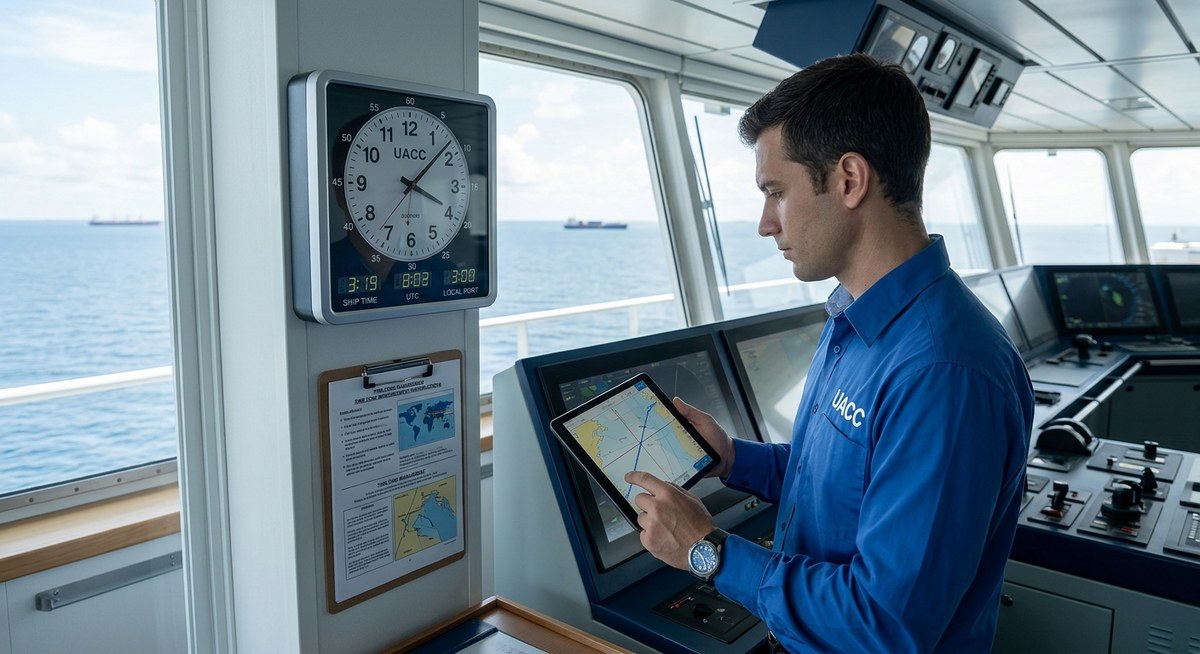
Across oceans, time is one of the most universal yet least understood challenges for ship operators. A vessel may sail from one hemisphere into another, cross the International Date Line, and exit into a completely different local time while the cargo keeps moving. For fleet operators, this is not a trivia question but a daily discipline that touches planning, crew welfare, safety, and on time performance. In this article we explore how shipping companies manage time zones at sea, from the clock policies on board to the minute by minute routines that keep watch schedules intact. You will see how time is kept, how it is adjusted across oceans, and what tools help maintain rhythm when the sun rises and falls in a different time zone every day.
Understanding time on board a vessel
Time on a ship is not just a clock on the wall. It is a system that coordinates human activity, vessel navigation, cargo handling, and shore communications. The ship may adopt a standard reference time, such as Coordinated Universal Time UTC, or it may use the local time of the last port of call or the destination port. The decision is driven by operational practicality and the needs of the fleet management system.
Key elements to understand:
– The master clock is the reference. The ship’s central time source is protected and redundantly powered to avoid drift.
– Local port time versus ship time. When in port, crews often align with the port’s local time to synchronize with stevedores, port authorities, and terminal operations.
– Time zones in motion. As the ship travels across longitudes, the indicated time on clocks and watches must reflect the vessel position to preserve schedule integrity.
This time discipline is essential for:
– Crew fatigue management and watch schedules
– Meeting port call windows
– Coordinating with itinerary changes and cargo operations
– Maintaining accurate logs for compliance and performance
Time zone crossing strategies
Time zone management is easiest when it is predictable. Most operators use a combination of gradual adjustments, a clear policy on time changes, and robust planning that accounts for navigation, weather, and port constraints.
Gradual time shifts
Rather than flipping the clock all at once, many fleets implement a staged adjustment. Typical approaches include:
– Moving the ship clock by one hour every 24 to 48 hours as the vessel crosses a time zone boundary.
– Aligning with local port time only when anchored or docking, then returning to a reference time at sea.
– Using a planned schedule that anticipates the next time zone and prepares crew shifts accordingly.
Benefits
– Reduced fatigue impact on crew
– More predictable watch handovers
– Lower risk of missed watches or missed communications
Time advance and time retard
Time advance means turning the clock forward to catch up with the new zone; time retard means turning the clock back when moving westward. In practice:
– Time advance is used when approaching a time zone ahead of the ship’s current time.
– Time retard is used when moving westward toward earlier hours.
– Both adjustments are communicated clearly to the crew, with updated watch order and meal planning to minimize disruption.
These adjustments are usually performed in small increments rather than large jumps, preserving operational stability.
Dateline and International Date Line considerations
Crossing the International Date Line adds complexity beyond a simple hour shift:
– Eastward crossings effectively move the date forward by one day.
– Westward crossings move the date backward by one day.
– In rare cases a crew may plan an extra day on long passages to absorb the impact on schedules, especially when tight port call windows are involved.
To manage this, operators log anticipated date changes in voyage plans and ensure the bridge and planning room teams are aligned on the expected date and time at each waypoint.
Port versus sea time policy
Most fleets use a dual approach:
– Sea time as the reference time for navigation, engine room operations, and voyage planning when away from shore.
– Port time when in the harbor for cargo operations, customs, and local coordination.
This dual approach minimizes confusion during critical operations and supports shore liaison.
Practical timetable planning across zones
When planning a voyage, the following elements are considered:
– The route and expected crossing dates
– The number of time zones to cross
– The pace of the voyage and weather windows
– The type of cargo and required port call sequencing
– The crew’s watch system and rest requirements
By forecasting these factors, operators can set expectations for arrival times, coordinate with ports, and reduce schedule risk.
Impact on crew and on board operations
Time zone changes ripple through the daily life of the crew. Watch schedules, meals, rest periods, and shipboard welfare all need careful management.
Watch schedules and fatigue management
Most ships operate a multi watch system, such as:
– Three watch rotations: 8 hours on, 8 hours off, 8 hours off
– Four watch rotations: 6 on, 6 off, 6 on, 6 off
Adjusting these watches during time zone shifts requires:
– Clear handover procedures to ensure continuity
– Pre planning of watch changes to balance workload
– Early briefing on expected time changes so crew can adjust their sleep patterns
The aim is to keep fatigue levels within safe limits while preserving operational readiness for navigation, engine room control, and cargo handling.
Rest hours and welfare
Time zone changes can disrupt sleep patterns, mood, and performance. Operators address this with:
– Structured rest periods aligned with international guidelines and company policy
– Access to quiet spaces on board and scheduled downtime when in port
– Communication with shore teams to adjust crew rest cycles during peak workloads
Meals and daily routines
Meal times shift with the clock, which can affect digestion and energy levels. Practical measures include:
– Flexible meal planning that follows watch transitions
– Pre-planned menus that are easy to adapt to different time zones
– Clear labeling of meal times in the vessel’s daily plan to avoid confusion
Communication with shore and fleet management
Time zone differences complicate communications with offices and clients:
– Schedules are coordinated in UTC or in the fleet’s standard reference time
– Shore teams adjust meeting times to accommodate the vessel’s current clock
– Real time updates are shared via trusted digital channels that display both local time and reference time
Tools and technology that keep time aligned
Technology is a key ally in managing time zones at sea. It reduces human error and creates transparency for the crew, pilots, and shore teams.
Chronometers and master clocks
- The ship’s master clock acts as the principal time reference
- Redundant time sources are standard to prevent drift or failure
- Portable chronometers provide a secondary layer of validation when required
Digital time management systems
- Voyage planning software displays times in both local port time and the fleet reference time
- Bridge alert systems notify crews when a time change is scheduled
- Automatic time zone update features in modern vessel management platforms help synchronize tasks and logs
Navigation and logging implications
- ECDIS and voyage data recorders rely on accurate time stamps for position logs
- Navigation logs, engine logs, and weather reports use consistent time references to reduce discrepancies
- Fatigue monitoring tools can adapt alerting based on crew rest periods across zones
Communication and connectivity
- 5G and satellite connectivity enable faster reporting of time changes and crew welfare needs
- Shore offices receive consistent time stamps that align with fleet-wide standards
- Crew contact with families and personal schedules is eased by predictable time management
Case studies and best practices
While every voyage is unique, successful time zone management follows a few universal patterns that many leading operators employ:
– Establish a clear time policy at the fleet level. The policy specifies the reference time (UTC or port/local) and when to apply changes.
– Plan time changes as part of the voyage plan. Time adjustments are integrated into the schedule, not added as an afterthought.
– Use gradual shifts rather than abrupt changes. One hour every 24 to 48 hours minimizes fatigue and confusion.
– Train crews on time zone concepts. Regular drills and quick reference guides help crews execute changes smoothly.
– Incorporate time zone planning into shore communications. Schedulers and masters share a common understanding of the vessel’s clock state at every waypoint.
– Align with port operations when in harbor. Local time is used for cargo handling, customs, and terminal coordination to avoid delays.
– Use technology to reinforce discipline. Fleet management systems present time across zones, and automated alerts ensure nothing slips through the cracks.
Concrete examples you might encounter:
– A vessel crossing multiple time zones on a two week voyage may gradually advance its clocks by one hour every two days until it aligns with the next major port’s time.
– A Westbound crossing across the International Date Line is carefully planned so that the date change happens during a non critical operational window, with watch crews prepared for the calendar shift.
– While at sea, the ship time remains consistent with UTC for voyage planning. When entering port, the clock is updated to local port time to synchronize with dockside teams.
Practical guidelines for fleet operators
If you are responsible for fleet operations, these guidelines can help you implement a robust time zone management program:
- Define a clear base time standard for the fleet and communicate it to all ships and offices.
- Create a documented time change policy that specifies when adjustments are made and by how much.
- Build time changes into voyage plans and crew rosters. Do not adjust clocks ad hoc.
- Use gradual adjustments to minimize fatigue and operational disruption.
- Align port time with cargo handling windows and shore operations while maintaining a reference time for logging.
- Equip ships with redundant master clocks and a reliable time distribution system.
- Provide crew training on time zone concepts, ship clocks, and the implications for fatigue management.
- Leverage fleet management software to visualize time across zones and to automate reminders for watches, meals, and rest periods.
- Prepare for edge cases such as International Date Line crossings and dateline related schedule shifts.
- Maintain clear communication protocols with shore teams, pilots, and port authorities so everyone shares a single time reference.
Best practices for crew welfare and safety
Time zone management is more than a logistics exercise. It is also a safety and welfare issue:
– Fatigue risk is reduced when watch schedules and time changes are predictable.
– Clear communication during handovers improves situational awareness and reduces errors.
– Adequate rest and predictable meal times support crew morale and performance.
By treating time management as a safety and welfare priority, fleets can improve reliability without compromising crew health.
Common questions about time zones at sea
-
Do ships use local time or UTC?
Most fleets use a central reference time such as UTC for planning and logs, while local time is used in port and cargo operations. Both references may be used depending on the operation and policy. -
How often do ships adjust their clocks when crossing time zones?
The common approach is to adjust gradually, typically one hour every 24 to 48 hours, depending on route, crew tolerance, and port schedules. -
What happens when crossing the International Date Line?
The calendar date changes by one day, and crews plan these changes to avoid disrupting critical operations. In practice, date changes are integrated into the voyage plan and crew handovers. -
How does the crew know when to adjust watches?
Time change reminders are built into the ship management system and are communicated during pre watch briefings. Handover notes include the updated time reference for the watch.
Final thoughts
Time zones at sea are a constant part of the operational fabric of modern shipping. By combining clear time policies with gradual clock adjustments, robust planning, crew training, and the right digital tools, shipping companies can maintain schedules, safeguard welfare, and ensure safety across thousands of miles of open water. Time on board is not simply about the moment on the clock; it is about the rhythm that keeps the fleet moving, the cargo arriving on time, and the crews performing at their best every single day.
If you are looking for more insights on fleet operations, weather guides, or technology driven improvements in maritime logistics, keep exploring the sections on our site. From wind assisted propulsion to 5G connectivity at sea, the world of maritime operations is evolving rapidly and your organization can benefit from the smartest time zone practices at sea.
No Responses